











General Information:
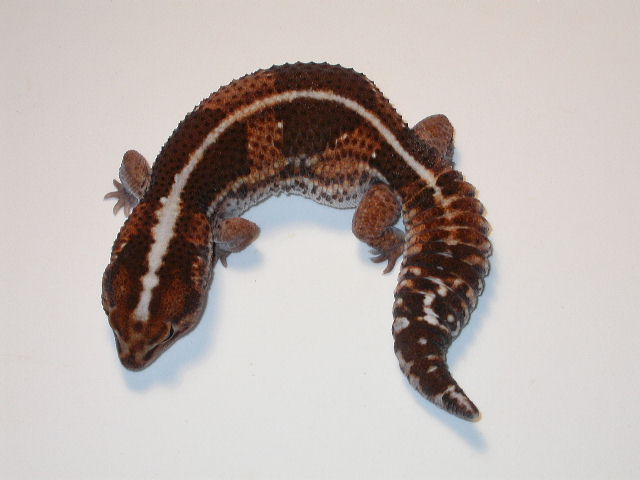
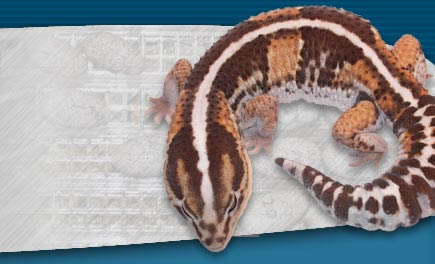
The African fat tail gecko (Hemitheconyx caudicinctus) is native to the West African region from Senegal to Northern Cameroon. Adults can obtain a length of 8 to 10 inches and easily 100 grams. Babies are around 3 to 3 1/2 inches in length and 3 grams. Fat tails are a terrestrial animal which means they are ground dwellers. Being nocturnal they are most active at night. Fat tails are very similar to leopard geckos although there are a few physical differences. Fat tails have smaller stockier feet and generally bulkier heads and bodies. Because they are similar to leos they have been gaining popularity as every year passes.Housing:
Fat-tails are very easy to house. A pair (1 male and 1 female) can live comfortably in a 10 gallon glass aquarium but larger is always better. Most breeders use some kind of rack system. Racks are easier because one can fit more geckos in a given area than with aquariums. Aquariums however are clear giving you the opportunity to view them better and see their natural behaviors. I house my adult fat tails in 28 quart Rubbermaid containers and hatchlings in 6 quart tubs. Never keep an animal in cramped quarters. This can cause stress and lead to other health issues.Substrate - The best substrate to use is paper, newspaper, paper towel, slate, tile or packed eco earth. I suggest not using sand at all as the gecko may become impacted and their environment needs to be more humid which sand consistently doesn’t provide. Impaction is when the gecko ingests sand which can build up and block the intestine. This is usually in an attempt to get calcium (see below for supplementation). My animals are all kept on paper or paper towel. When keeping them on these substrates you must provide a humid shelter. If you’re looking for a more naturalistic look packed eco earth (coconut fiber) works well. Don’t ever use aquarium gravel, walnut shells or calcium sand. These substrates can be fatal if caught in the gecko’s digestive system. Never use cedar or pine shavings. These are toxic to reptiles.
Hides - In order for the gecko to feel secure in its enclosure provide several hiding places. These can be as simple as inverted plant saucer pans, plants, wood etc. It’s a good idea to put a hide on both the warm end and cool end (discussed in heat section below) of the cage. This will allow them to hide and feel comfortable on both ends of the cage. Along with a “dark” hide they need a humid hide. This is important because fat tails need more humidity in their environment. The most popular is using a throw away container such as a glad or Tupperware container. Cut a hole in the lid and fill it with moist peat moss, sphagnum moss, eco earth, or paper towel. This will provide enough humidity to allow the gecko to shed properly.
Heat & Light - Provide a hot spot of 88 to 90 degrees fahrenheit on the warm end with the cool side of the cage in the mid 70’s. It is very important to provide a temperature gradient for the animal. This is basically having a warm end and a cool end that will allow the animal to regulate its own body temperature. There are several different ways to provide proper heat. One is using under tank heating. This is a strip of heat tape or an under tank heat map that runs under the cage. This is probably the best heat as it is direct belly heat. Another way is to provide a heat lamp with a 40 or 60 watt light bulb. This will give off heat and light. Because fat tails are nocturnal there is no need for special UVB lighting. The heat source will need to be somehow regulated. This can be achieved by using a rheostat or dimmer switch allowing you to adjust the temperature. Make sure to never overheat your geckos. Excessive heat even for a short period of time can and will most likely be fatal.
Quarantine - Quarantining new animals is very important and should be practiced by everyone. This is placing new animals separate from established colonies to make sure they are healthy. They should be in a separate room using their own items that are not shared with the established animals. This period should last anywhere from 30 to 90 days. Take care of the quarantined animals last and wash your hands thoroughly afterwards. If there happens to be a problem with your quarantined animals it’s easier to treat them than it is your entire collection.
Handling - Fat tails are by far one of the tamest geckos I have seen, even more so than leopard geckos. When holding any animal it’s best to take it slow. When you first acquire a new animal don’t hold them for several weeks to several months depending on the individual. This will allow them to adjust to their new environment. Once they have calmed down gently hold the gecko by letting it walk across your hand as it is inside the cage. Once the gecko is familiar with you, you can take it out and hold it. Remember that too much handling too fast or too rough of handling can cause stress on the animal. Another thing to remember is to never grab the tail! If threatened, the tail will detach. Many reptiles are capable of this defense mechanism. It will grow back but will look nothing like the original.
Food & Water:
Fat tails are insectivores and the most common items used in captivity are crickets, mealworms, superworms, silkworms and small cockroaches as a staple diet. The occasional pinkie mouse (only a few days old) and waxworms can be given as a treat. Pinkie mice should only be given to full grown adults and are excellent for breeding females. Not all individuals will eat them but the majority prefer them live. Feed waxworms sparingly as they can become very addictive to geckos and not as healthy because they are very fattening. Only feed as much as the gecko will consume in a given feeding. Depending on the size of the gecko this can be anywhere from 4 to 8 crickets. Left over prey running in the cage can cause stress and the gecko might get nibbled on by hungry insects. Babies should be fed everyday with adults being fed every other day. If you’re feeding mealworms, superworms or anything else that can be contained in a dish they can be left with the animal 24/7 without harm. The gecko will only eat what it wants. As a general rule the prey item should be no larger than half the width of the geckos head to prevent choking.Gutloading - Make sure to gutload all food items for 24 hours prior to feeding. Gutloading is feeding very nutritious/high quality foods to prey prior to feeding to your animals. These can include but not limited to fruits, vegetables and grains. There are also many commercially available products that are in powder form. I make and use Pro Gutload for all my feeders. Gutloading will ensure a healthier insect and in the long run a healthier gecko. Remember your geckos are what they eat.
Supplementation - Calcium and vitamins are essential for reptiles. The most common way of offering this to them is by dusting the prey just before feeding. This can be done with the “shake and bake” method. Using a plastic bag or some type of container, add a small amount of calcium and vitamins supplement. Add a few food items and gently shake the bag until they are covered in calcium. They are now ready to offer for feeding. When dusting crickets make sure to feed them right away because they clean the calcium off. Babies should get dusted prey items at least 4 times a week but preferably at every feeding and adults 1 to 2 times per week. Egg laying females should also get dusted food items at every feeding as they are using large amounts of calcium to produce the egg shells.
I use and recommend osteo-form and vionate as my calcium/vitamin supplement. There are many different products on the market with Rep Cal and Miner-all being the most notable. I also provide a dish of calcium for the gecko that’s with them 24/7. If the gecko wants more calcium they can lick what they want. You may not see your geckos doing this but believe me they are. Lack of supplementation will eventually lead to MBD (Metabolic bone disease) and can cause serious problems with reptiles. Some symptoms include very weak and lethargic animals that will display soft limbs and bones.
Water - Offer a dish of fresh water at all times. I use a 2 ounce or 4 ounce portion cups for my babies and adults. Keeping the water fresh is very important so it should be changed regularly. Water that is stagnant is a breeding ground for bacteria and can cause illness.
Maintenance:
Cleanliness is an absolute must especially when keeping several geckos. The cleaner the cages are the less chance there is of having diseases spread. So this should be done on a regular basis. If you’re using paper or paper towel change it every week or sooner if needed. Change water dishes and give fresh water. Each month you should deep clean everything including water dishes, hides, the cage and anything else that may be in it. Chlorhexidine solution is excellent for cleaning and disinfecting everything.Breeding:
Fat tail breeding is almost identical to that of leopard geckos. However before you attempt breeding keep in mind the amount of time, space and resources needed to maintain the breeders and babies. What will you do with the babies if they don’t sell right away? Can you still house and take care of them? These are just a few things to consider before attempting breeding. Most people fail to realize this until they have babies.With that being said you’re breeders need to be ready. Make sure they are full grown adults, healthy and at a good weight. I recommend males a minimum of 8 months old and 45 grams and females being a minimum of 1 year old and 50 grams. Although those are the minimums I prefer my females to be no less than 60 grams as it will be easier on them. If your female can be around 2 years old that would be even better for her.
Sexing - Before you can start breeding you’ll need a sexually matured pair. There are a few different methods to do this. The easiest way is to look at the under side of the gecko. The male will have two pronounced hemipenal bulges behind the vent on the tail side. You can also look for pre-anal pores that will be in a "V" shape just above the vent between the hind legs. Females will not have the hemipenal bulges but may have pre-anal pits rather than enlarged pores. If a female is obese she may appear to have bulges but it’s just fat. Another way to tell is just by looking at them. Males are heavy bodied, have thicker necks with their heads being broader than a female.
Breeding - Fat tails aren’t as easy to breed as leopard geckos are. Unlike leopard geckos fat tails should have a cool down or hibernation period to stimulate breeding. Stop feeding a week prior to a cool down. Gradually lower the temperature until it is 70 to 75 degrees fahrenheit as a high. Do this for about 4 weeks then gradually raise the temperatures back to normal. Once they are warmed up offer the pair as much food as they’ll eat so they can gain back the weight they lost during the cool down. After a few weeks, put the male with the female. The geckos may mate right away or it might take a little time. Leave the male with the female for several days and then take him out. You may need to do this several times until you have a successful mating. It also doesn’t matter if you place the male with the female or visa versa. Both ways will have the same result.
When you place the pair together the male will be aggressive toward the female. He will start biting her and if she is not receptive she will bite back. It may appear as if they are fighting but this is normal behavior. The male will also shake the tip of his tail very quickly. This can be loud at times but again it’s normal behavior and nothing to worry about.
Eggs - Up to 4 weeks after a successful mating the female will lay her first clutch of eggs. Each clutch will consist of 1 to 2 white oval eggs. Fat tails can easily lay 8 clutches a year with each clutch being laid in 2 to 4 week intervals. Make sure to provide a suitable container for the female to lay her eggs in. This is basically the humid hide filled with moist but not saturated bed-a-beast.
Incubation - After being laid the eggs need to be removed and placed in an incubator. Fat tail eggs are temperature sexed dependent. This means that you can decide what sex baby you want just by incubating at a certain temperature. The text below shows the results with the given temperatures.
Female = 80 degrees fahrenheit
50% mix of both sexes = 85 degrees fahrenheit
Male = 90 degrees fahrenheitThe eggs will hatch in 30 to 105 days. Males generally hatch faster because of the higher temperatures. Females take longer because of the cooler temperatures. On average incubation for females lasts around 60 days and males around 35 days.
Conclusion:
Although fat tails aren’t as popular as leopard geckos they are still close to the top of the list. There are not as many color variations as there are with leos but as more people work with them more will be created. Their ease of keeping and very gentle nature is winning the interest of keepers everywhere. If you’re looking for a first time pet gecko the fat tail is one of the best.