











General Information:
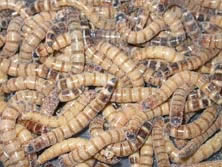
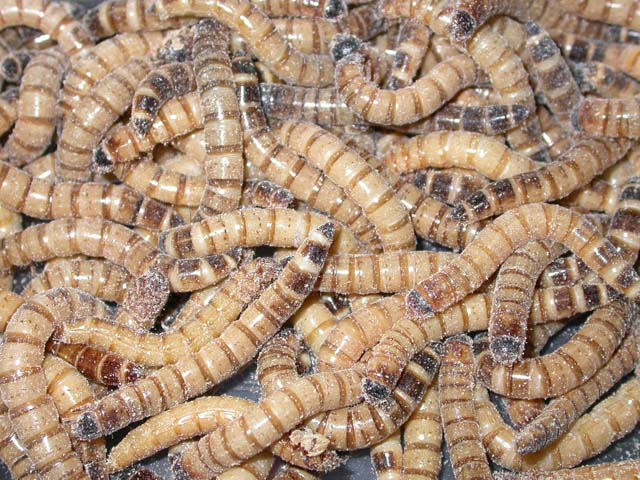
Superworms (Zophobas morio) native to tropical Central and South America are a very popular food item for reptiles. These larva have several common names including kingworms and zophobas. They measure 1 1/2 to 2 inches in length and are about the thickness of a number 2 pencil. Because of their size and movement they’ll easily catch the attention of your animals. They are naturally large and have been given no growth hormones unlike the giant mealworm. The total life span for a superworm is a little over a year from egg to beetle.Housing:
Superworms can be placed in any container that you may have. Make sure that the container is high enough so they can’t climb out. Usually containers that are 5 inches or more in height are sufficient. I’ve found that plastic Rubbermaid tubs or cat litter pans work best. Make sure that the container is clean before you use it.Heat & Light - Superworms prefer a darker environment so lighting is not necessary. The best temperatures to keep them at are in the mid 70s to the low 80s. If superworms are overheated you will notice them coming to the top of the substrate as well as a significant die off. Although superworms can sustain temperatures of up to 90 degrees I like keeping them a little cooler so their better hydrated. Also never refrigerate superworms! They can’t take cold temperatures and death will be the result.
Food & Water:
Superworms will eat just about anything you give them. Keep them in 1 to 4 inches of wheat bran, oats or a highly nutritious gutload. Make sure to gutload all food items for 24 hours prior to feeding your reptiles. Gutloading is feeding very nutritious/high quality foods to prey prior to feeding to your animals. There are also many commercially available products that are in powder form. I make and use Pro Gutload for all my feeders. Gutloading will ensure a healthier insect and in the long run a healthier animal.Water - Hydration for superworms is very important. A lack of moisture will result in cannibalism. Things such as carrots, potatoes, fruits etc. are all suitable for moisture. Not only is it a source of moisture but these items also double as food. Depending on the size of your container place several pieces of these on top of the substrate. After a few days remove the uneaten moisture source and replace it with new. Just make sure that the bedding doesn’t get too moist. If it does it could harbor bacteria and possibly mites. I also use water crystals which have yielded great results. They are also much cheaper than potatoes or carrots.
Maintenance:
Maintenance for superworms is minimal as long as their needs are met. The biggest thing is make sure that they are given enough moisture. The bedding will also need changed on a regular basis when it becomes fine and sandy looking. Sift the worms out and give them new bedding.Breeding:
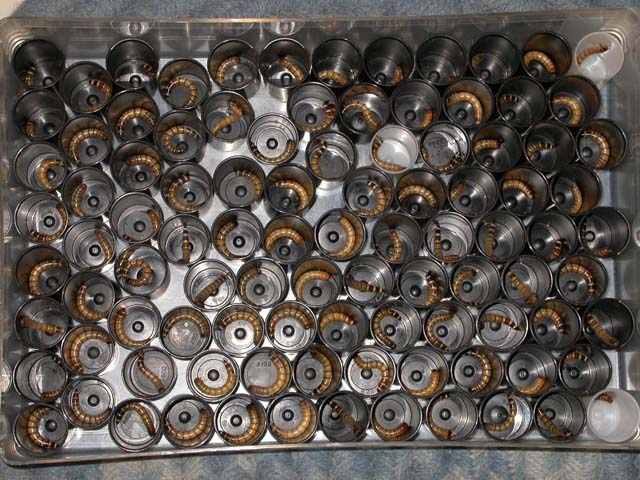
Breeding superworms is very similar to that of mealworms but with a few differences. One difference is the worms will need to be separated individually so they can pupate. If you keep all the worms together you will never get beetles to start another generation. The larva will become large enough to start the “morphing” process at about 5 months of age. Choose the largest worms you have and place a single worm into an empty 35mm film container. I’ve found film containers work best as they require very little space. Leave the worm in the empty film container with no food or water. Adding food or water to the film container prolongs them to pupate and makes a bigger work load for you.
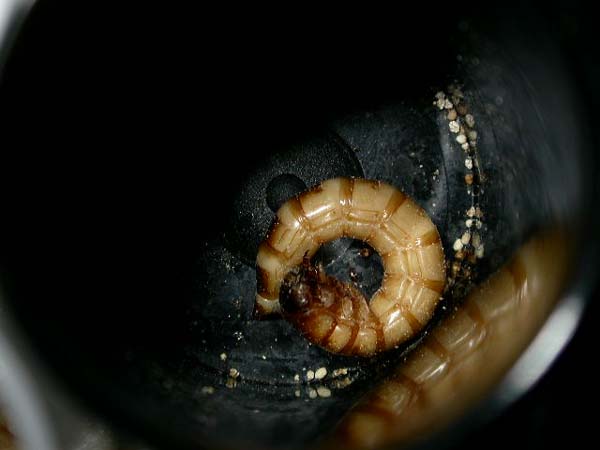
If you see the worms curled up (image below) the metamorphosis process is underway. If the worm is straight looking or black then it is probably dead. The process from larva to pupae takes 1 to 2 weeks.
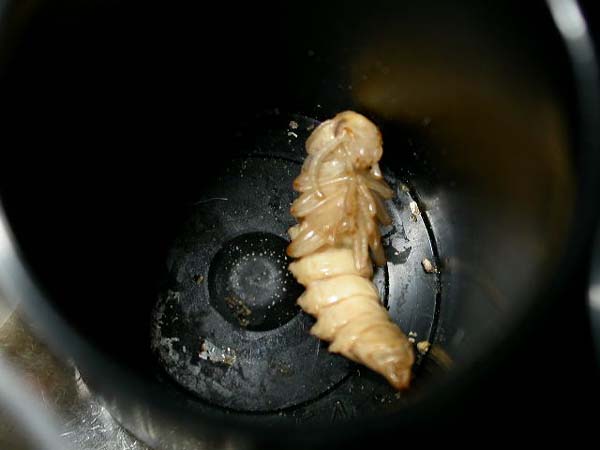
The worm below has now pupated and is in its third stage of life. Leave either leave the pupae in the film container or you can put them all in another container and start the process with the film containers again. This is what I do and it works well if you have limited space. In another 1 to 2 weeks the pupae will turn into a beetle.
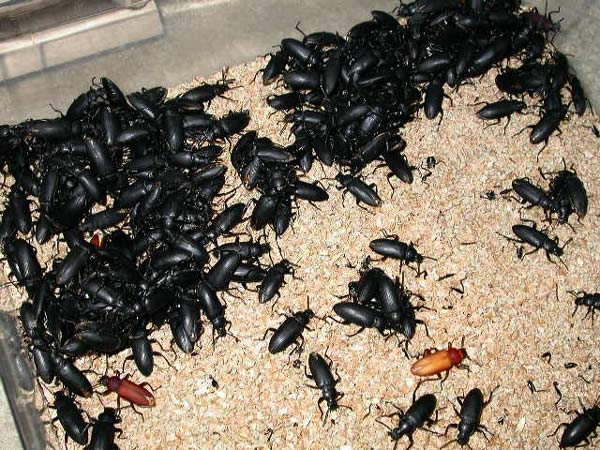
Now your container holds a beetle. Place all the beetles together in their own fresh container. Put 1/2 to 1 inch of bran at the bottom of the container. Offer them potatoes, carrots and fruits for moisture as you would for the larva. About every 2 to 4 weeks remove the beetles from the bedding and place them in a fresh container. This allows the eggs to hatch and further your chances of getting more worms. If the beetles are left they will prey on the eggs and possibly the newly hatched larva. The newly hatched worms could do the same.
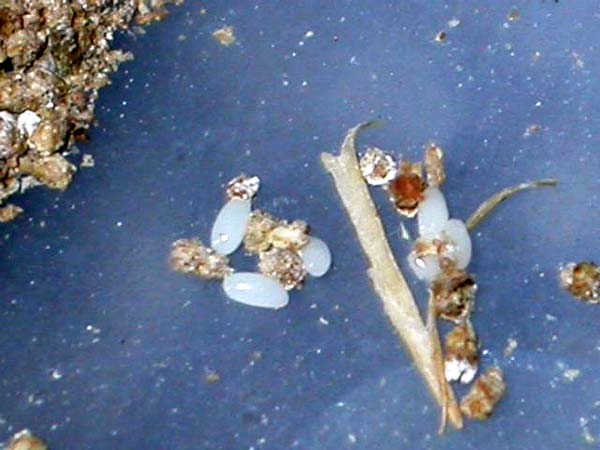
Eggs and Babies - The eggs are very tiny white ovals and look similar to a grain of rice. They will start to hatch within a few weeks but you won’t notice them for about a month because of their tiny size. Newly hatched babies seem to die if they are kept too hot so the mid to high 70s is ideal. Moisture again is absolutely essential so offer them chunks of potato or carrots. After 5 to 6 months the babies will be large enough to start the process again. Below is a picture of what superworm eggs look like.
Conclusion:
Superworms are a very popular food item for reptiles. With less chitin (exoskeleton) than the common mealworm they are easier for your animal to digest. With time and patients you can easily raise all your own superworms.